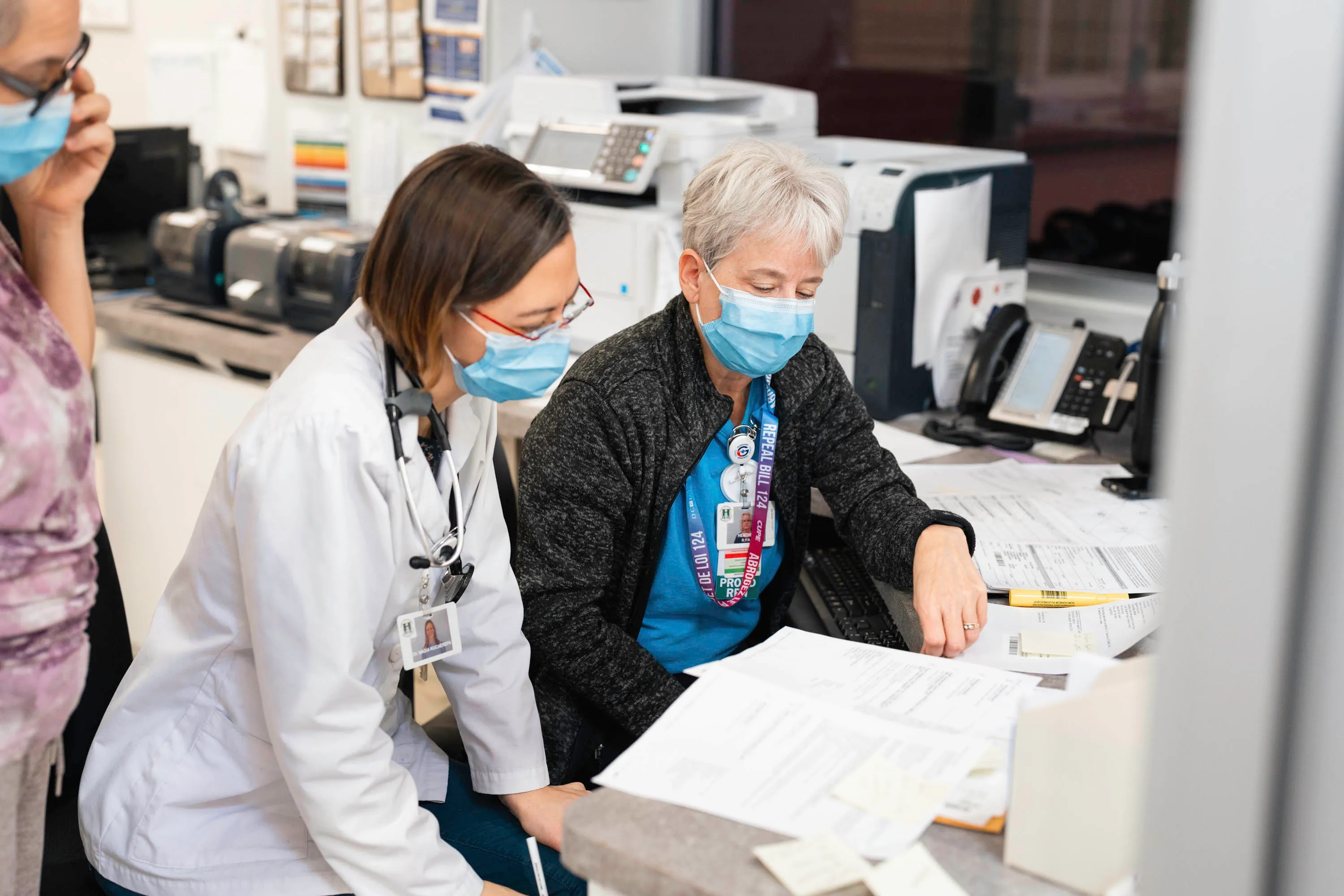
Rehabilitation

Patients admitted to our rehabilitation programs receive timely, equitable and consistent access to the rehabilitation care that they need. The rehabilitation programs address a wide variety of issues including:
- Self-care skills such as feeding, grooming, dressing, bathing and toileting
- Mobility skills such as transfers, walking and self-propelling a wheelchair
- Communication skills in speech and language
- Cognitive skills such as memory and problem solving
- Social skills for interacting with other people
The goals of rehabilitation are based on the needs of the patient and their families. During their stay, patients will be challenged to acquire the necessary skills that will foster independence and autonomy in their own activities of daily living in a stimulating and supportive environment.
Inter-Professional Health Care Team
- Physician
- Nurse
- Personal Support Workers
- Physiotherapist
- Occupational Therapist
- Speech Language Pathologist
- Physiotherapy/Occupational Therapy Assistant
- Registered Dietician
- Pharmacist / Pharmacy Technician
- Care coordinator/Discharge Planner
- Registered Respiratory Therapist
- Rehabilitation Clerk
- Social Worker (on consultation)
- Optometrist (on consultation)
- Physiatrist (on consultation)
Admission Criteria
- Medically stable
- Motivation, tolerance and endurance to actively participate in therapy
- Ability to learn and retain new skills
- Potential to progress functionally and cognitively
Discharge Planning
Discharge planning starts early on during your stay. The inter-professional team with you and your family will start planning an appropriate and safe environment that will meet your care needs.
Outpatient Physiotherapy Clinic
Our registered physiotherapists offers assessment, goal setting, treatment planning, education, individual and group exercise programming, and home exercise program in both official languages. A physician referral is required to access outpatient physiotherapy services.
Our goal is to provide early access to assessment and the most current, best practice treatments to help you return to your daily routine. Patients are engaged in setting their treatment goals and are expected to participate in their assigned home program to help their full functional recovery.
Our outpatient physiotherapy clinic is OHIP/publicly funded.
Regional Stroke Rehabilitation Program
The HGMH stroke inpatient program provides rehabilitation to patients who have suffered a recent stroke to maximize function and promote independence.
The length of stay in stroke rehabilitation is determined by using standardized assessments and set Provincial benchmarks.
The patient and their care partners are at the center of the stroke recovery team. The healthcare team will help you recover from or adapt to the changes and teach you about stroke, its effects, and strategies to use in your daily life to optimize your overall function.
Why does rehab work?
The brain can make up for functions lost in damaged areas following a stroke. It does this by reorganizing and rewiring itself. This ability is called neuroplasticity. The goals of stroke rehabilitation are to help you recover as much function as possible.
Time is critically important when treating stroke, as the longer someone goes without intervention, the more brain cells are damaged. If you suspect that you or someone is having a stroke, remember to act F.A.S.T., which stands for Face drooping, Arm weakness, Speech difficulty, and Time to call 911. These simple steps take less than a minute and can help you diagnose a stroke.

Geriatric and General Inpatient Rehabilitation Programs
The Geriatric and General Inpatient Rehabilitation programs provide rehabilitation to patients who are recovering from a recent illness, injury, surgery, or any condition resulting in a loss of autonomy.
Cardiovascular and Pulmonary Rehabilitation Program
This program aims to improve the quality of life, reduce symptoms, prevent future complications, and enhance the overall well-being of patients with cardiovascular or pulmonary disease.
Supervised exercise programs are offered, tailored to individual needs. Education sessions are done with the patient to provide them with the knowledge and skills needed to achieve their personal goals and improve their quality of life.
To be eligible for this program, you must have been:
• Diagnosed with cardiovascular disease or underwent a cardiac event, procedure, or surgery
Or
• Diagnosed with a pulmonary disease such as chronic obstructive pulmonary disease (COPD), bronchiectasis or pulmonary fibrosis.
How to Access Our Services?
- A referral from a family physician or nurse practitioner is required for inpatient rehabilitation.
- A referral form from a Cardiologist is required for cardiovascular rehabilitation.
- A referral from a Respirologist is required for pulmonary rehabilitation.
- A referral from a physician or nurse practitioner is required to access outpatient physiotherapy services and should be faxed to 613-525-5655.
For more information, please contact the Manager of Rehabilitation Services at 613-525-2222 X 4330
Physiatry (Physical Medicine & Rehabilitation)
What is Physiatry?
Physiatry, also known as Physical Medicine and Rehabilitation, is a medical specialty focused on improving function, mobility, and quality of life for individuals affected by injury, illness, or neurological conditions. Physiatrists specialize in diagnosing and treating physical impairments and helping patients achieve their highest level of independence and participation in daily life.
Stroke Rehabilitation
Stroke can affect mobility, cognition, communication, mood, vision, and the ability to participate in everyday activities. Physiatry services support patients throughout their recovery journey by assessing and managing stroke-related challenges, including:
- Mobility and movement difficulties
- Shoulder pain
- Neuropathic pain
- Visual field deficits
- Cognitive concerns
- Post-stroke fatigue
- Mood changes
- Communication challenges
- Return-to-work planning
- Return-to-driving assessments and guidance
- Community participation and reintegration
- Other functional concerns related to stroke recovery
Spasticity Management
Spasticity is a condition that causes muscles to become stiff, tight, or difficult to control. It can occur following stroke or other neurological conditions and may interfere with movement, comfort, and daily activities.
Physiatry services include the assessment and management of spasticity associated with
- Stroke
- Traumatic brain injury
- Spinal cord injury
- Multiple sclerosis (MS)
- Other central nervous system conditions
Treatment options for spasticity may include Botox injections and other individualized interventions designed to improve function, reduce discomfort, and support participation in daily activities.
Referrals
A referral from a physician or nurse practitioner is required. To support a comprehensive assessment, referrals should include relevant clinical information, current medications, and any pertinent imaging or laboratory results. Referrals can be faxed to our central booking office at 613-525-0147.